
The record
Taking the printing of alcohol and tobacco tax stamps in Türkiye away from foreign capital on grounds of “localisation” was initially presented as a protectionist policy. Yet a look behind the scenes, at corporate transfers and the supply chain, raises serious questions under international commercial law and the Swiss Criminal Code.
The great illusion: they said they had left, yet remained at the centre
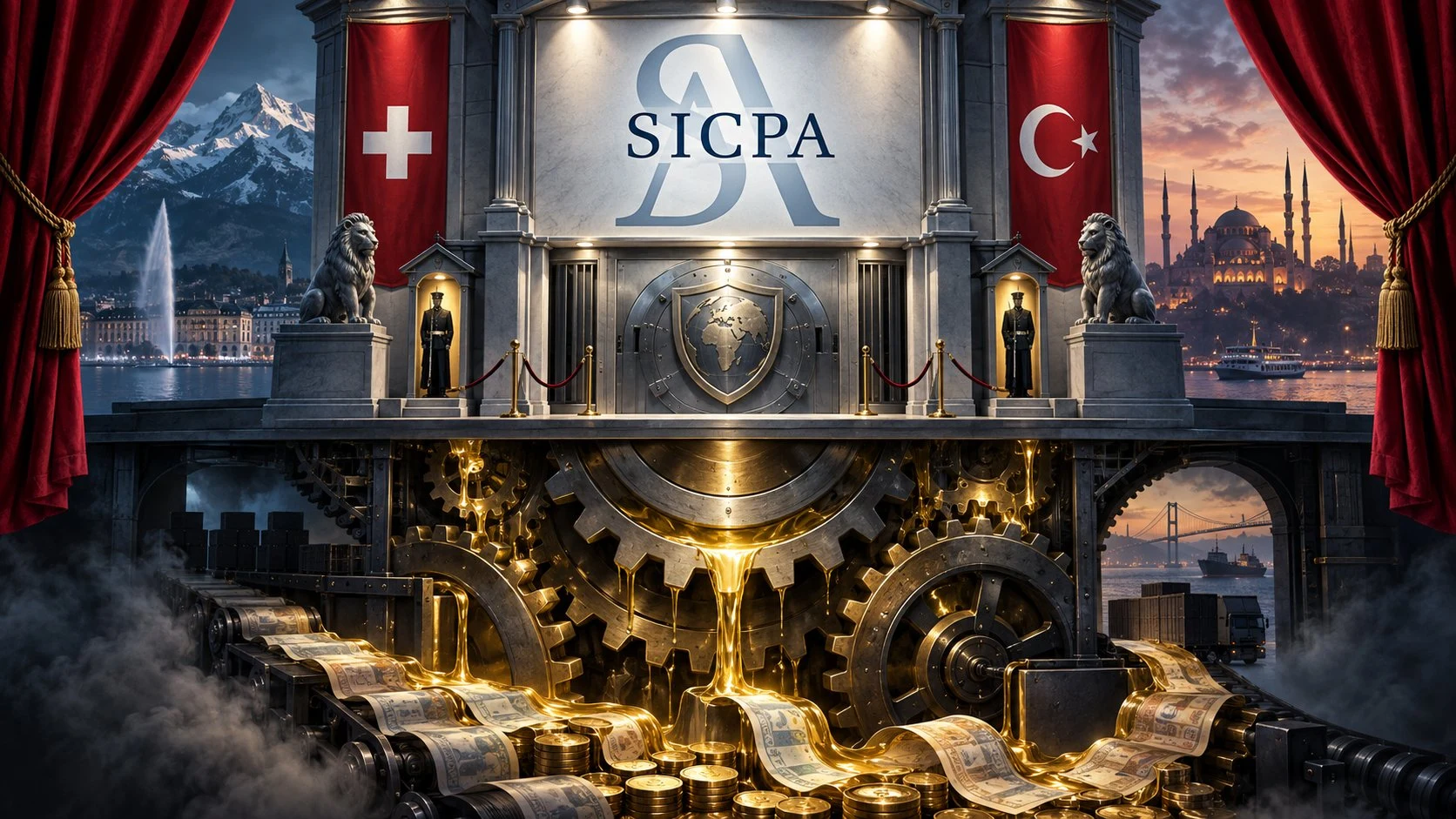
SICPA appeared to withdraw from the Turkish market when its contract expired at the end of 2019. What happened, however, was not a “withdrawal” but a “change of form”. When the work was transferred to DNS İnovasyon, a company just four months old with no printing plant and no experience, SICPA’s logistical and technical infrastructure stood behind it like an invisible wall.
The documents in our possession and testimony from the field raise the question of whether SICPA was unaware of the intermediary’s nature. Did the Swiss giant, using its own technology, its own ink and its operational capacity described as “technical support”, turn a blind eye to the intermediary’s unjustified gains and the grey area it created? Or did it genuinely remain merely a supplier? Whether this was passive supplier monitoring or an active commercial relationship is a judgment we leave to the public.
One business, three names: from DNS to DİAS, then GSM2
The tax-stamp business did not remain with DNS İnovasyon for long. DİAS Bilişim A.Ş. was established in October 2020. A succession of transactions in August 2021 transferred the business from DNS to DİAS. Founder Halil İbrahim Danışmaz left the management. He was replaced by Murat Çeçen, chairman of the DİAS Corporate Group, which operates the Ankara and Mersin city hospitals.
Was this merely a change of name, or an ownership transfer intended to remain out of public view? The documents show that the business is now conducted by GSM2 İnovasyon Sistemleri ve Teknoloji A.Ş., part of the DİAS Corporate Group. The company describes its 10,000-square-metre facility in the Bağyurdu organised industrial zone in Kemalpaşa, İzmir, as “one of Europe’s largest high-security printing centres”.
The question remains: why was work awarded without a tender to a four-month-old company transferred to another company within a year? Given Murat Çeçen’s known role in major public projects such as city hospitals, was the move to DİAS a coincidence or a planned transition? Responding to the allegations, DİAS said there was no “business partnership”. Whether that statement sufficiently explains SICPA’s actual production role and the function of the intermediaries is also for the public to judge.
What does the Swiss Criminal Code say, and what do the documents show?
SICPA’s CHF81 million conviction in 2023 established the inadequacy of its compliance systems. Its Türkiye operations in 2020–2025, however, raise questions about whether that conviction led to lessons being learned.
This brings Article 102(2) of the Swiss Criminal Code, concerning corporate responsibility, into the discussion. Under Swiss law, if a company knows or could know that its employees or subcontractors are committing offences and fails to take “all reasonable organisational measures” to prevent them, the company is held directly responsible.
1. The question of repetition: if SICPA maintained this “grey” structure in Türkiye while the Swiss Office of the Attorney General’s investigation was under way, and even as the conviction became final, would this count as negligence or intent? How would the defence that “we fixed our compliance system” be assessed in those circumstances?
2. Money-laundering risk (Article 305bis): if some of the excessive sums paid to, or retained by, the intermediary flowed to politically exposed persons, what would SICPA’s role in that chain be?
3. Bribery of foreign public officials (Article 322septies): Swiss law defines bribery of an official in a foreign country as a crime in Switzerland even if that country’s domestic law does not criminalise it. How would financing or tolerating the intermediary’s margin in Türkiye be assessed under this provision?
The “clean bill” for global tenders is being questioned
After its 2023 conviction, SICPA turned to the “self-cleaning” mechanism to survive in global procurement, particularly EU and World Bank projects. It told regulators: “The old management has changed, systems have been established; do not exclude us from tenders.”
The Türkiye file in our possession nevertheless calls the legal foundations of that defence into question. The documents show that SICPA continued to work through the same intermediary model even during the period in which it said it had “cleaned up”.
Article 57 of EU Public Procurement Directive 2014/24: a final corruption conviction permanently damages a company’s “reliability” and constitutes a ground for mandatory exclusion from procurement for up to five years. A new case undermines the defence that the company has rehabilitated itself.
FCPA and UK Bribery Act: if even one dollar in this operation passed through US banks, if US-origin software or technology was used, or if there is a UK connection, sanctions in Washington and London will be much heavier than those in Switzerland.
The coming days will answer whether SICPA is now a “giant that made mistakes” or, as established by the documents, an organisation that “systematically builds commercial networks through intermediary models”.
A crisis of trust for GovTech and the WHO
SICPA’s real product is not ink or a barcode, but “trust”. In discussions concerning the illicit-trade protocol to the World Health Organization’s Framework Convention on Tobacco Control, SICPA positions itself as an “independent and reliable technology provider fighting smuggling”.
Yet the documents in our possession make one question unavoidable: can a company that sustains a corruption network harming the state on its own production line under the heading of “technical support” be asked how it would prevent global tobacco smuggling?
If the 400% rise in Turkish tax-stamp prices shows that part of the money leaving the public treasury flowed into a questionable pool through a Swiss company’s “front” partner, how credible are SICPA’s promises of “ethical traceability”? Consultants in Brazil, political connections in the Philippines, politically connected front companies in Türkiye: the documents reveal that the promise of trust SICPA sells in GovTech faces a serious test. Whether it passes is, again, for the public to decide.
Based on reporting from: TBMM · Rıdvan Turan · 7/34865 · 30.09.2020; TBMM · Mehmet Akif Hamzaçebi · 7/37151 · 06.10.2020; TBMM · Uğur Bayraktutan · 7/42939 · 03.03.2021; TBMM · Behiç Çelik · 7/42941 · 04.03.2021; TBMM · Çetin Osman Budak · 7/51254 · 17.09.2021; TBMM · Arslan Kabukcuoğlu · 7/52544 · 05.10.2021; TBMM · Mehmet Akif Hamzaçebi · 7/54030 · 22.10.2021; TBMM · Mehmet Akif Hamzaçebi · 7/55904 · 17.12.2021; TBMM · Mehmet Akif Hamzaçebi · 7/58585 · 03.02.2022; Sözcü — Erdoğan Süzer · 29.09.2020; Cumhuriyet — Gamze Bal · 30.09.2020; Yurtsever · 04.10.2020; ANKA — Bora Erdin · 17.02.2021; ANKA — Kibar Holding statement · 17.02.2021; Sözcü — Erdoğan Süzer · 16.09.2021; Sözcü · 12.01.2022; Sözcü — Turkish Mint statement · 23.07.2022; YouTube · Video source.
Video source
Watch on YouTube ↗This video is hosted on YouTube. An internet connection is required.
Source documents
18- TBMM · Rıdvan Turan · 7/34865 · 30.09.2020tbmm.gov.tr
- TBMM · Mehmet Akif Hamzaçebi · 7/37151 · 06.10.2020No public link supplied
- TBMM · Uğur Bayraktutan · 7/42939 · 03.03.2021No public link supplied
- TBMM · Behiç Çelik · 7/42941 · 04.03.2021No public link supplied
- TBMM · Çetin Osman Budak · 7/51254 · 17.09.2021No public link supplied
- TBMM · Arslan Kabukcuoğlu · 7/52544 · 05.10.2021No public link supplied
- TBMM · Mehmet Akif Hamzaçebi · 7/54030 · 22.10.2021No public link supplied
- TBMM · Mehmet Akif Hamzaçebi · 7/55904 · 17.12.2021No public link supplied
- TBMM · Mehmet Akif Hamzaçebi · 7/58585 · 03.02.2022No public link supplied
- Sözcü — Erdoğan Süzer · 29.09.2020No public link supplied
- Cumhuriyet — Gamze Bal · 30.09.2020No public link supplied
- Yurtsever · 04.10.2020No public link supplied
- ANKA — Bora Erdin · 17.02.2021No public link supplied
- ANKA — Kibar Holding statement · 17.02.2021No public link supplied
- Sözcü — Erdoğan Süzer · 16.09.2021No public link supplied
- Sözcü · 12.01.2022No public link supplied
- Sözcü — Turkish Mint statement · 23.07.2022No public link supplied
- YouTube · Video sourceyoutube.com
File updates
Report published
Editorial note
Research analysis supplied to The Ledgers. Allegations and legal interpretations are the author’s assessments, not findings in a Türkiye-related judgment. The 2023 Swiss decision concerned a separate case. Source references supplied without URLs are retained as bibliographic entries. The linked video has not been independently reviewed for this edition.
Submit a response or correction ↗Reader comments
Verified members can comment. Comments appear after editorial approval. Please address the evidence and avoid personal information.
No published comments yet.
Sign in / Create account →Stay with the story.
Follow The Ledgers for new investigations, developments in our case files and videos.